
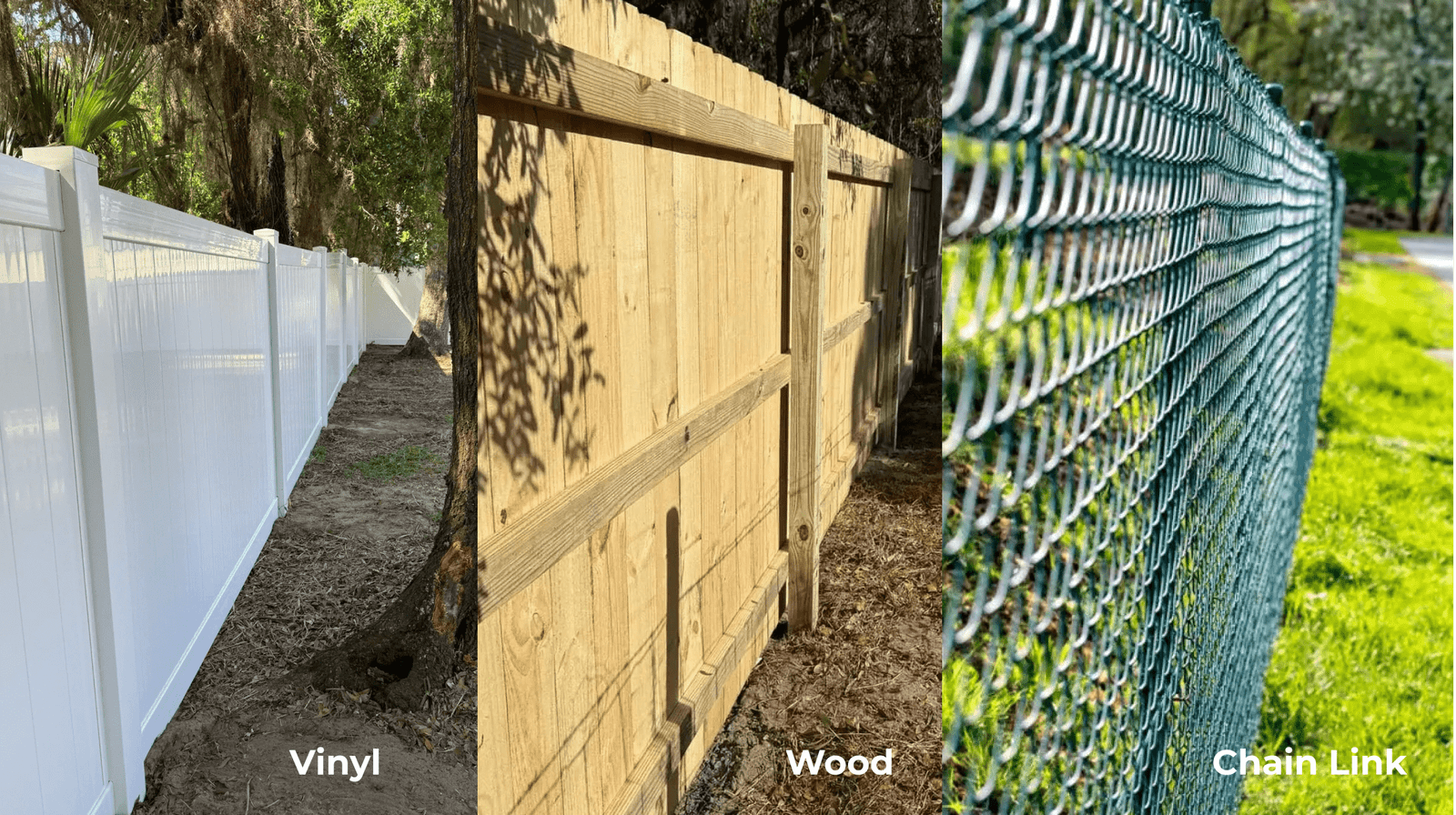
Florida’s climate is brutal on fencing materials. Between relentless UV rays, hurricane-force winds, daily humidity cycles, and seasonal storms, your fence faces conditions that challenge materials like nowhere else. Not all fencing materials respond the same way to these extremes, and choosing the wrong one can mean premature replacement.
At Bells Outdoor Services, we’ve installed and maintained thousands of fences across Ocala and Marion County. We’ve tracked which materials provide the best long-term value under Florida’s unique conditions.
The Florida Climate Challenge
Florida presents unique challenges for fencing materials:
UV Intensity: Some of the most intense UV radiation in the continental US breaks down plastics and fades colors rapidly.
Humidity Cycles: Daily swings from near 100% humidity at dawn to 50-60% in afternoon create expansion and contraction stress.
Salt Air: Even inland properties experience salt-laden air that accelerates corrosion and material degradation.
Severe Weather: Hurricane-force winds, hail, and driving rain test structural integrity beyond normal limits.
Biological Factors: Mold, mildew, termites, and pests thrive in Florida’s warm, moist environment.
Vinyl Fencing: The Low-Maintenance Champion
Lifespan in Florida: 20-30 Years
Vinyl fencing has emerged as the clear winner for longevity in Florida’s climate, provided you choose high-quality materials with proper UV inhibitors.
Why Vinyl Excels:
- UV-resistant formulations prevent brittleness and fading
- Non-porous surface resists mold, mildew, and staining
- Immune to termite damage and wood rot
- Flexible enough to withstand wind loading
- No organic materials to attract pests
Vinyl’s Aging Process:
- Years 1-5: Looks virtually new with minimal cleaning
- Years 5-15: Gradual color fading, structure remains solid
- Years 15-25: Some brittleness in extreme sun, occasional panel replacement
- Years 20+: Still functional but may show significant UV wear
Maintenance Requirements:
- Annual pressure washing to remove mildew
- Occasional panel replacement from impact damage
- Hardware inspection after severe storms
When Vinyl Fails
Low-quality vinyl without UV stabilizers can become brittle and crack within 10-15 years. Cheap vinyl installations often fail during hurricane seasons, requiring complete replacement.
Warning signs include yellowing within 3-5 years, cracking along stress points, and panels that feel brittle to touch.
Wood Fencing: Classic Beauty with Maintenance Requirements
Lifespan in Florida: 10-20 Years with Proper Care
Wood fencing can provide good longevity in Florida, but only with consistent maintenance and quality materials. Success depends on staying ahead of moisture intrusion and insect damage.
Best Wood Options:
- Pressure-treated pine (most common and economical)
- Cedar (naturally resistant to insects and decay)
- Cypress (excellent rot resistance, limited availability)
Wood’s Aging Timeline:
- Years 1-2: Fresh appearance, minimal maintenance
- Years 3-5: First weathering signs, staining/sealing required
- Years 5-10: Regular maintenance prevents major issues
- Years 10-15: Board and post replacement becomes common
- Years 15+: Major sections may need reconstruction
Critical Maintenance:
- Seal or stain every 2-3 years
- Annual inspection for loose boards and hardware
- Prompt replacement of damaged sections
- Vegetation control for airflow around fence base
Where Wood Struggles
Moisture Problems: Humidity and rain create ideal rot conditions, especially where wood contacts soil.
Insect Damage: Termites, carpenter ants, and powder post beetles compromise structure.
Storm Vulnerability: Often suffers significant hurricane damage requiring extensive repairs.
Maintenance Burden: Ongoing requirements become expensive and time-consuming.
Chain Link Fencing: The Durable Workhorse
Lifespan in Florida: 15-25 Years
Chain link fencing, when properly galvanized or vinyl-coated, provides excellent longevity with minimal maintenance.
Chain Link Advantages:
- Galvanized coating resists rust and corrosion
- Open weave allows wind to pass through, reducing storm damage
- Minimal maintenance requirements
- Easy to repair individual sections
- Cost-effective for large perimeters
Aging Process:
- Years 1-10: Minimal visible aging with proper coating
- Years 10-15: Some surface rust on cut edges
- Years 15-20: Gradual coating wear, increased maintenance
- Years 20+: Structural integrity remains, appearance declines
Maintenance:
- Annual inspection for rust spots and loose connections
- Touch-up painting on damaged areas
- Hardware lubrication and adjustment
Chain Link Limitations
Appearance: Many find it less aesthetically pleasing than other options.
Privacy: Provides minimal privacy without additional screening.
Rust Vulnerability: Poor-quality galvanizing can lead to rapid rust in Florida humidity.
Head-to-Head Longevity Comparison
Best Overall Longevity: Vinyl fencing with UV inhibitors consistently outlasts other materials, often remaining functional 25-30 years with minimal intervention.
Most Maintenance-Intensive: Wood requires the most ongoing maintenance but can achieve good longevity with diligent care. However, maintenance costs over 15-20 years often exceed initial savings.
Best Value: Chain link provides the best combination of initial cost, longevity, and low maintenance for utilitarian applications.
Factors That Affect Longevity
Installation Quality: Poor installation significantly reduces lifespan regardless of material. Proper post depth, drainage, and hardware are critical.
Material Grade: Budget materials often fail prematurely. Higher-grade materials with proper treatments provide dramatically better longevity.
Maintenance Consistency: Regular maintenance dramatically extends fence life, while neglect accelerates failure.
Environmental Exposure: Fences in full sun, coastal areas, or drainage areas face additional challenges.
Making the Right Choice
Choose Vinyl When: Long-term value is priority, minimal maintenance desired, appearance consistency matters, privacy important.
Choose Wood When: Initial budget is limited, traditional appearance preferred, comfortable with regular maintenance, customization options important.
Choose Chain Link When: Security and visibility priorities, large perimeter needs economical enclosure, maintenance time limited, pet containment primary need.
Professional Installation Makes the Difference
Proper installation is critical for achieving maximum lifespan in Florida’s challenging climate. At Bells Outdoor Services, we understand specific techniques needed for each material:
- Proper post depth and spacing for wind resistance
- Drainage considerations for seasonal rains
- Hardware selection for salt air and humidity resistance
- Code compliance for hurricane-prone areas
The Verdict
While each material has its place, quality vinyl fencing consistently provides the best long-term value for Florida homeowners. The higher initial investment pays dividends through reduced maintenance costs, better storm resistance, and longer replacement intervals.
However, the “best” fence meets your specific needs, budget, and aesthetic preferences while providing reliable service in Florida’s demanding climate.
FAQs
Does vinyl color affect longevity? Lighter colors reflect more heat and UV radiation, potentially lasting longer than darker colors.
Can wood fencing last 20+ years in Florida? Yes, but requires premium materials, expert installation, and consistent maintenance. Most homeowners find the ongoing effort unsustainable.
Is galvanized chain link better than vinyl-coated? Vinyl-coated typically lasts longer and looks better but costs more initially. The coating prevents rust better than galvanizing alone.
What’s the most common cause of fence failure? Post failure due to inadequate installation depth or poor drainage accounts for most premature fence failures.
Should I repair or replace an aging fence? If repair costs exceed 40-50% of replacement cost, or failures become frequent, replacement usually provides better value.
How do hurricanes affect fence longevity? Major storms can instantly age fences several years due to wind stress, impact damage, and ground shifting.
Choose Quality for Longevity
Your fence is a long-term investment affecting your property’s value, security, and appearance for decades. Understanding how materials perform in Florida’s climate helps you make an informed decision you’ll be happy with for years.
Ready to invest in a fence that will stand the test of time? Contact Bells Outdoor Services for a comprehensive consultation. We’ll assess your property, discuss your priorities, and recommend the solution that provides the best combination of longevity, performance, and value.
Don’t gamble with materials that fail prematurely. Call Bells Outdoor Services today for expert guidance on choosing the right fence for Florida’s demanding climate.

