
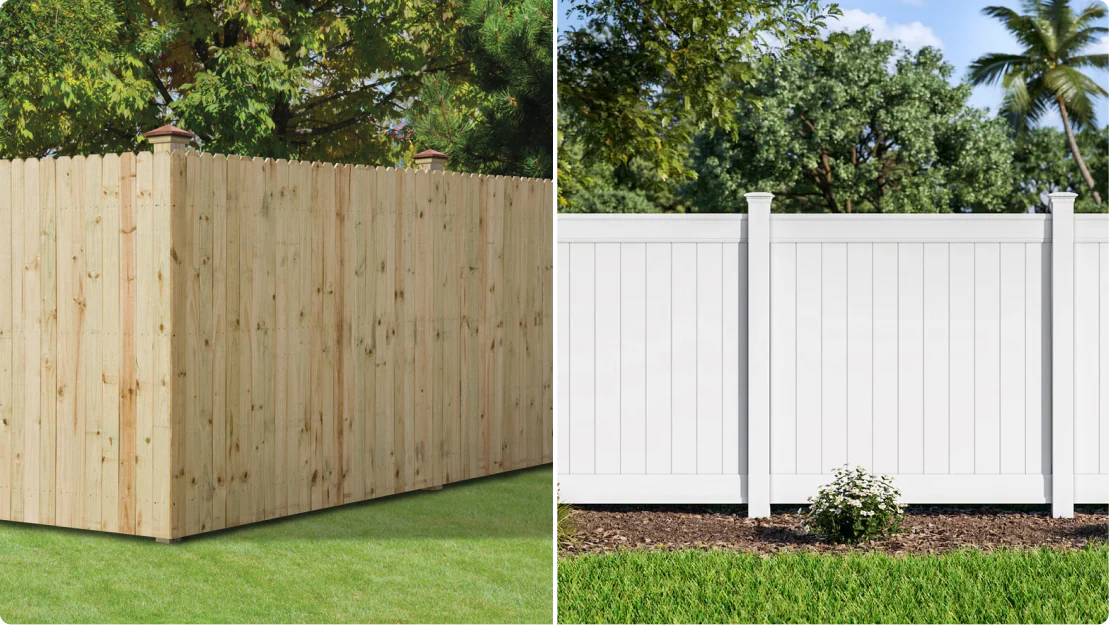
Ocala, Florida, as the “Horse Capital of the World,” demands the highest standards for equestrian facilities. When planning your perimeter or paddock fencing, two questions dominate the decision-making process: What is the safest option? and What is the true Ocala horse fencing cost per foot, vinyl vs wood horse fence Ocala?
Fencing on an equestrian property is not just a boundary; it is a critical safety feature and a major asset that impacts both property value and the health of your animals.
This comprehensive guide, informed by years of experience installing and maintaining fences across Marion County, breaks down Florida safety regulations, provides a deep-dive cost analysis of vinyl vs wood horse fence Ocala, and helps you choose the material that offers the best long-term return on investment (ROI).
Table of Contents
- Ocala’s Fencing Mandate: Safety and Local Codes
- Ocala Horse Fencing Cost Per Foot: The Upfront Breakdown
- Cost-Benefit Analysis: Vinyl vs Wood Horse Fence Ocala
- The Gold Standard: Recommended Materials for Equine Safety
- Installation Excellence: Why Local Experience Matters
- Conclusion: Securing Your Equestrian Investment
1. Ocala’s Fencing Mandate: Safety and Local Codes
Fencing for horses is governed more by safety best practices than strict residential codes. In Marion County, the focus is on injury prevention and ensuring visibility for high-value, high-risk livestock.
The Three Pillars of Horse Fence Safety
- Visibility: Fences must be easily seen by a horse, particularly when running or startled. This makes wide rails (like plank fencing) or dark colors essential.
- Containment Height: The minimum recommended height for a horse perimeter fence is 5 feet (60 inches) to deter jumping. Dividing paddock fences can be slightly shorter (4.5 feet), but should be higher than the horse’s natural shoulder height.
- Impact Forgiveness: The fence must not splinter into dangerous shards, or cause entanglement that leads to severe injury. This rules out materials like barbed wire and large-gap woven wire mesh.
Florida and Marion County Fence Regulations
While standard residential fences under six feet rarely require a permit in Marion County, equestrian fences must adhere to safety and livestock standards:
- Agricultural Exemption: Many farm and ranch fences fall under agricultural use, often simplifying the permit process compared to residential boundary fences.
- Legal Fence Standard (FS 588.011): Florida law defines a “legal fence” (often 3 to 5 feet high, depending on purpose) for livestock containment, though equestrian properties usually build well above these minimum standards for safety.
- Post Spacing: To prevent dangerous flex on impact from a 1,200-pound animal, posts should be spaced closer together—ideally 8 to 10 feet maximum. This tight spacing is factored into the final Ocala horse fencing cost per foot.
2. Ocala Horse Fencing Cost Per Foot: The Upfront Breakdown
The initial investment (the Ocala horse fencing cost per foot) varies dramatically based on material, number of rails, and site preparation. The following figures represent average installed costs for quality, horse-safe systems:
| Fence Material (Installed) | Rails/Strands | Estimated Ocala Cost Per Foot | Safety & Visibility |
| Treated Pine/Wood Board | 3 or 4 Rails | $20 – $30 | Excellent |
| Vinyl Post & Rail | 3 or 4 Rails | $20 – $35 | Superior |
| No-Climb Wire Mesh | Mesh + Top Rail | $10 – $20 | Excellent (Wire needs Top Rail) |
| High-Tensile Electric | 3-5 Strands | $5 – $10 | Good (Psychological Barrier) |
These figures include quality materials, professional installation labor, and concrete setting of all posts—essential for stability in Ocala’s sandy soils, where posts require deep setting (minimum 2.5 feet, 3+ feet for corners).
Factors That Increase Your Cost Per Foot
- Terrain & Soil: Uneven land or areas requiring significant brush clearing (forestry mulching) will increase the labor component.
- Number of Rails: Going from a 3-rail fence to a 4-rail fence immediately increases your material cost by 25-33%.
- Gates: Custom or automated gates are a significant single cost, typically ranging from $400 to $1,200 each, depending on size and hardware.
3. Cost-Benefit Analysis: Vinyl vs Wood Horse Fence Ocala
When comparing vinyl vs wood horse fence Ocala, the discussion shifts from initial cost to long-term cost of ownership (ROI). Wood is cheaper to install today, but vinyl saves thousands over the life of the fence in maintenance.
Treated Wood Board Fencing
- Pros: Traditional aesthetic, high visibility, lower initial Ocala horse fencing cost per foot.
- Cons: High Maintenance in Florida. Wood requires regular sealing/staining every 2-3 years to combat UV degradation and high humidity. It is susceptible to termite damage and rot, leading to frequent board replacement.
- Long-Term Cost: Over a 20-year period, wood fences in Florida can accrue an additional $8,000 to $15,000 in maintenance costs for a standard-sized property.
- Safety: While visible, wood can splinter on hard impact, posing a puncture risk.
Vinyl Post & Rail Fencing
- Pros: Superior Durability and Low Maintenance. Vinyl requires only an occasional wash; it never needs painting, staining, or sealing. It is completely resistant to rot, insects, and humidity. Excellent visibility and impact safety (flexes rather than splinters).
- Cons: Higher initial Ocala horse fencing cost per foot (upfront investment is typically 15-30% more than wood).
- Long-Term Value: Vinyl has a lifespan of 25–30+ years, offering a projected ROI of up to 65% compared to wood’s 10%. Over 20 years, quality vinyl can save a property owner $6,000 to $12,000 in maintenance costs alone.
Recommendation: For long-term Marion County property owners and commercial operations, the long-term cost-benefit analysis overwhelmingly favors vinyl fencing.
4. The Gold Standard: Recommended Materials for Equine Safety
For optimal horse safety and property containment, we often recommend a combination system.
No-Climb Mesh with Top Rail
Often called the gold standard for equine perimeter safety, No-Climb wire mesh (typically 2″ x 4″ openings) is the ideal blend of security and economy.
- Safety Feature: The small 2″x4″ openings prevent hooves from getting caught, unlike square woven wire.
- Visibility: It must be paired with a highly visible top rail (wood or vinyl) as the wire itself is difficult for horses to see, especially when running.
- Containment: Provides an excellent physical barrier for both horses and other animals (dogs, coyotes).
Choosing the Right Gate
Gates are the most abused part of any fence line. For horse properties, prioritise:
- Secure Latching: Latches must be secure and horse-proof (not easily lifted or nudged open).
- Smooth Operation: Gates must be wide enough for farm equipment and operate smoothly to prevent horses from bolting.
- Self-Closing Hinges: Essential for busy paddocks to ensure gates are never left ajar.
5. Installation Excellence: Why Local Experience Matters
In the Ocala market, installation quality is just as important as material choice. Bell’s Outdoor Services provides the Expertise necessary to navigate local soil and weather conditions.
- Sandy Soil Challenge: Ocala’s sandy soil offers poor structural support. We compensate by setting all posts (line posts and terminal posts) deeper than residential standards and using the proper concrete footings to ensure long-term stability and resistance to high winds.
- Line Planning: Professionals plan the fence line to accommodate utility easements, local setbacks, and the unique contours of the land, ensuring compliance and efficiency.
- Internal Link: Fencing often follows major land prep. If your property needs clearing before installation, read about our Forestry Mulching and Land Clearing Services.
Securing Your Equestrian Investment
Choosing the right fence is the foundation of a safe, valuable equestrian property in Ocala. While the initial Ocala horse fencing cost per foot may favor wood, the superior long-term safety, minimal maintenance, and extended ROI of vinyl vs wood horse fence Ocala systems make modern materials the smart investment for serious farm owners.
Ensure your installation meets the highest standards for safety, durability, and local compliance.
Ready to protect your horses and enhance your property? Contact Bell’s Outdoor Services today for a comprehensive site assessment and a detailed quote on the ideal horse fencing solution for your Marion County farm.

